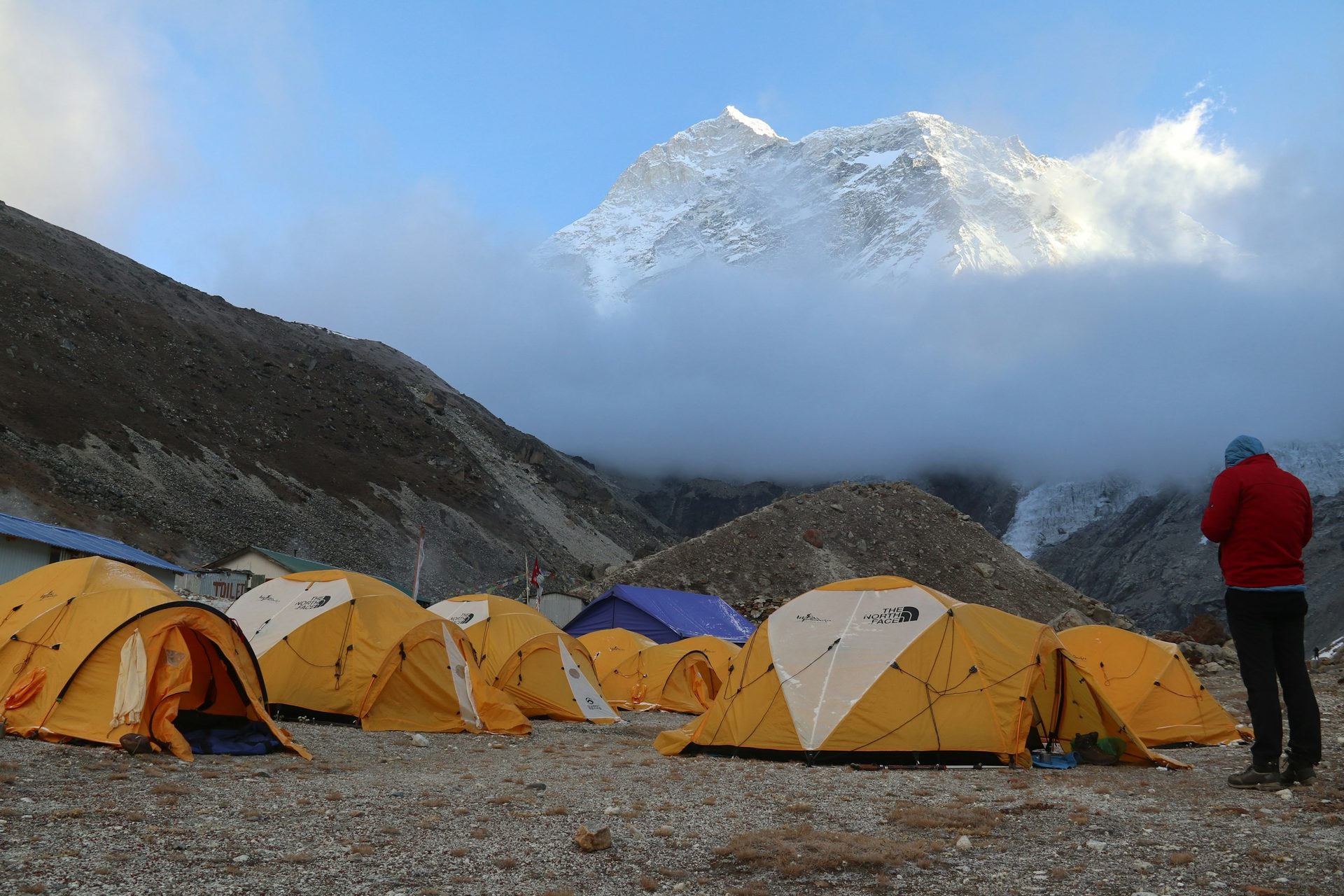




Kanchenjunga North vs South Base Camp: Which Trek Should You Choose?
 Nepal Vision Treks
 Sep 15, 2025
 13 Min Read
Most of the journeys in Nepal offer large mountains, and Kanchenjunga provides more than that: space, a feeling of silence, and a roughness that is not present on the busy Everest or Annapurna trails. It is a country of deep valleys, rhododendron woodlands, and villages that are still strongholds of the Limbu and Rai cultures. Every step is a revelation of wilderness, each turn of the path suggests the secret of the mountain.
It is the loveliness of Kanchenjunga that you can view its face in two very different perspectives. Hiking to the North Base Camp is the equivalent of entering the stark, alpine scenery, Tibetan-style villages, and the panoramas of wide-open views that make you look small in relation to the size of the range. Pangpema on the north side of Kanchenjunga is like a wall of ice and rock, and on either side stand mountains with names like legends, Jannu, Wedge Peak, Pyramid Peak.
The South Base Camp, on the other hand, starts softer. The path takes you through rich woods, terraced lands, and cultural basins before subjecting you to the icy of the Yalung Glacier. It is a more intimate, personal view here, not a sweeping horizon, but nearly face to face with the western summit, Yalung Kang, of Kanchenjunga, and it is being crowded in on by the mountain.
Two routes. Two moods. One mountain. Now the only question that remains is easy: on what side of Kanchenjunga do you wish to meet first?
Kanchenjunga North Base Camp Trek: A Journey Into the Wild Himalayas
The Kanchenjunga North Base Camp Trek is a distant and high-altitude expedition that brings the trekkers into the rough wilderness of eastern Nepal and provides a close experience of Kanchenjunga, the third-highest mountain in the world, measuring 8,586 meters.
The expedition ends in Pangpema, 5,143 meters, where vast landscapes of the north face of Kanchenjunga and glaciers make the trekkers marvel. The path crosses through thick rhododendron forest, terraced fields, meadows, and barren glacial terrain along the way and offers a never-ending view of the naturally beautiful landscape.
Cultural elements are incorporated into the trek through visits to remote Tibetan-influenced villages, including Chirwa, Lelep, and Ghuns, which introduce trekkers to the Limbu, Rai, and Sherpa communities, as well as monasteries, prayer flags, and centuries-old traditions. In the Kanchenjunga Conservation Area, wildlife lovers might be rewarded by sightings of rare animals such as red pandas or snow leopards.
The North trek is an arduous one and is characterized by steep climbs, high passes, lengthy trekking days, and very little infrastructure, hence suited to experienced trekkers who want to be in solitude, adventure, and the pure Himalayan splendor. The most suitable times to hike here are spring (March-May), when the rhododendrons are in bloom, and autumn (September-November), when the skies are clear and the mountain vistas are stunning.

Kanchenjunga South Base Camp Trek: Lush Valleys and Glacier Views
Comparatively, the Kanchenjunga South Base Camp Trek is a little less challenging yet equally captivating trip, which takes one to South Base Camp by the Oktang Viewpoint standing at 4,730 meters.
This expedition takes one through lush rhododendron forests, fertile southern valleys, alpine meadows, and eventually to the grand Yalung Glacier, where trekkers get a close-up view of the south face of Kanchenjunga and other adjacent peaks, including Rathong, Kabru, and Kokthang.
The trail goes through culturally diverse villages inhabited by Rai, Limbu, and Tibetan Buddhist Sherpa groups, particularly in Ghunsa, which offer the trekkers a close-up cultural experience besides a natural wonder. Although the South route is less challenging than the North trek, it is greener and less alpine with gentler ascents, and the landscape is greener and better exposed to villages and facilities.
Similar to the adjoining northern region, spring and autumn are the most pleasant seasons to do this trek as the trails are clear and the skies offer a beautiful view of the Kanchenjunga massif.
Combining North and South Base Camps: The Kanchenjunga Circuit Trek
The North and South treks present entirely different visions of the same mountain: the Northern is spectacular, remote, and rough, which is the best place to be when a person is in search of adventure and wants to experience both the high-altitude beauty and the local culture in depth, whereas the Southern one is already a green, culturally saturated, and glacier-oriented place.
Whether individually or both together in the Kanchenjunga Circuit, the two treks exhibit the unmatched natural beauty, culture, and Himalayan grandeur of one of the most isolated areas in Nepal.
Indeed, the North and South Base Camp Treks can be combined into one extensive expedition, known as the Kanchenjunga Circuit Trek. This expedition connects the two base camps to provide a comprehensive exploration of the Kanchenjunga region, allowing trekkers to experience the rugged and high-altitude beauty of the North and the fertile, glacier-filled landscape of the South in a single trip.
The Kanchenjunga Circuit Trek begins in Taplejung and goes up the North to Pangpema ( North Base Camp, 5,143 m) and crosses high Himalayan passes, e.g., Selele La and Sinion La, to descend to the South Base Camp near Oktang Viewpoint (4,730 m). These are the high passes where the panoramic views are of Kanchenjunga and other mountains, the glaciers, alpine meadows, and remote villages.
The entire circuit trek generally covers a period of 1824 days, depending on the itinerary selected as well as acclimatization days and side trips. The trekkers will pass through a very diverse terrain, which includes thick rhododendron forests and the fertile valleys of the south, as well as being exposed to the rugged terrain of the Alps and glacial moraine in the north. In the process, you get to experience an intriguing blend of cultures, such as Limbu, Rai, and Tibetan-inspired Sherpa packs.

Which Trek Should You Choose?
Kanchenjunga North Base Camp
- Suited for adventure seekers and experienced trekkers.
- Rugged alpine terrain with glacial landscapes and panoramic views of the north face.
- Remote Tibetan-influenced villages with cultural experiences.
- Higher altitude (5,143 m) and challenging trails require good physical conditioning.
Kanchenjunga South Base Camp
- Suitable for trekkers seeking moderate difficulty and lush scenery.
- Gradual ascents through rhododendron forests, alpine meadows, and along the Yalung Glacier.
- Cultural immersion with the Limbu, Rai, and Sherpa communities.
- Slightly lower altitude (4,730 m) makes it more accessible.
Full Kanchenjunga Circuit Trek
- Combines North and South Base Camps via Selele La and Sinion La passes.
- Offers diverse landscapes: glaciers, alpine meadows, forests, and high passes.
- Demands endurance, acclimatization, and preparation for long trekking days (18–24 days).
- Ideal for seasoned trekkers seeking adventure, cultural exposure, and pristine natural settings.
Tips for Completing the Kanchenjunga Circuit Trek
- Plan logistics well in advance, including flights, permits, guides, and porters.
- Maintain strong physical fitness with cardio, strength, and endurance training.
- Acclimatize properly to high altitudes, especially above 4,500 meters.
- Pack layered clothing, sturdy trekking boots, rain gear, sleeping bags, trekking poles, a first-aid kit, and water purification supplies.
- Hire experienced guides and porters for their expertise in safety, navigation, and cultural insights.
- Respect local customs and traditions; seek permission before photographing people or monasteries.
- Stay hydrated and consume light, frequent meals to maintain energy.
- Prepare for rapidly changing weather, including cold, rain, and snow.
- Be ready for remote conditions with limited medical facilities and communication.
- Pace yourself; take breaks to enjoy landscapes and cultural experiences.

To wrap up, the Kanchenjunga region offers an unforgettable trekking experience, whether you choose the rugged North Base Camp with its high-altitude alpine terrain and Tibetan-influenced villages, the lush and culturally rich South Base Camp, or the full Kanchenjunga Circuit that combines the best of both worlds through glaciers, high passes, and vibrant local communities. Each route delivers breathtaking mountain vistas, serene wilderness, and immersive cultural encounters to make it perfect for both seasoned adventurers and trekkers seeking moderate challenges.
Plan your Kanchenjunga adventure with Nepal Vision Trek today, and let our expert team customize your trek for a safe, seamless, and truly memorable Himalayan journey. Your dream adventure awaits. Reach out now to start exploring one of Nepal’s most remote and spectacular regions.
FAQs
What is the Kanchenjunga North Base Camp Trek?
What is the Kanchenjunga South Base Camp Trek?
What is the Kanchenjunga Circuit Trek?
How long does the Kanchenjunga Circuit Trek take?
Which trek is best for beginners?
Which trek is best for experienced trekkers?
What is the best season to trek to Kanchenjunga?
What permits are required for the Kanchenjunga treks?
How difficult is the Kanchenjunga North Base Camp trek?
Can I customize my Kanchenjunga trek?